Waterline tiles, mosaics and pool feature walls
The waterline is a maintenance band, not a ribbon of decoration. Mosaic, grout and the walls that spill or seat people decide how the pool ages.
Custom Pools editorial team · 16 December 2025 · Updated 10 January 2026 · 18 min read
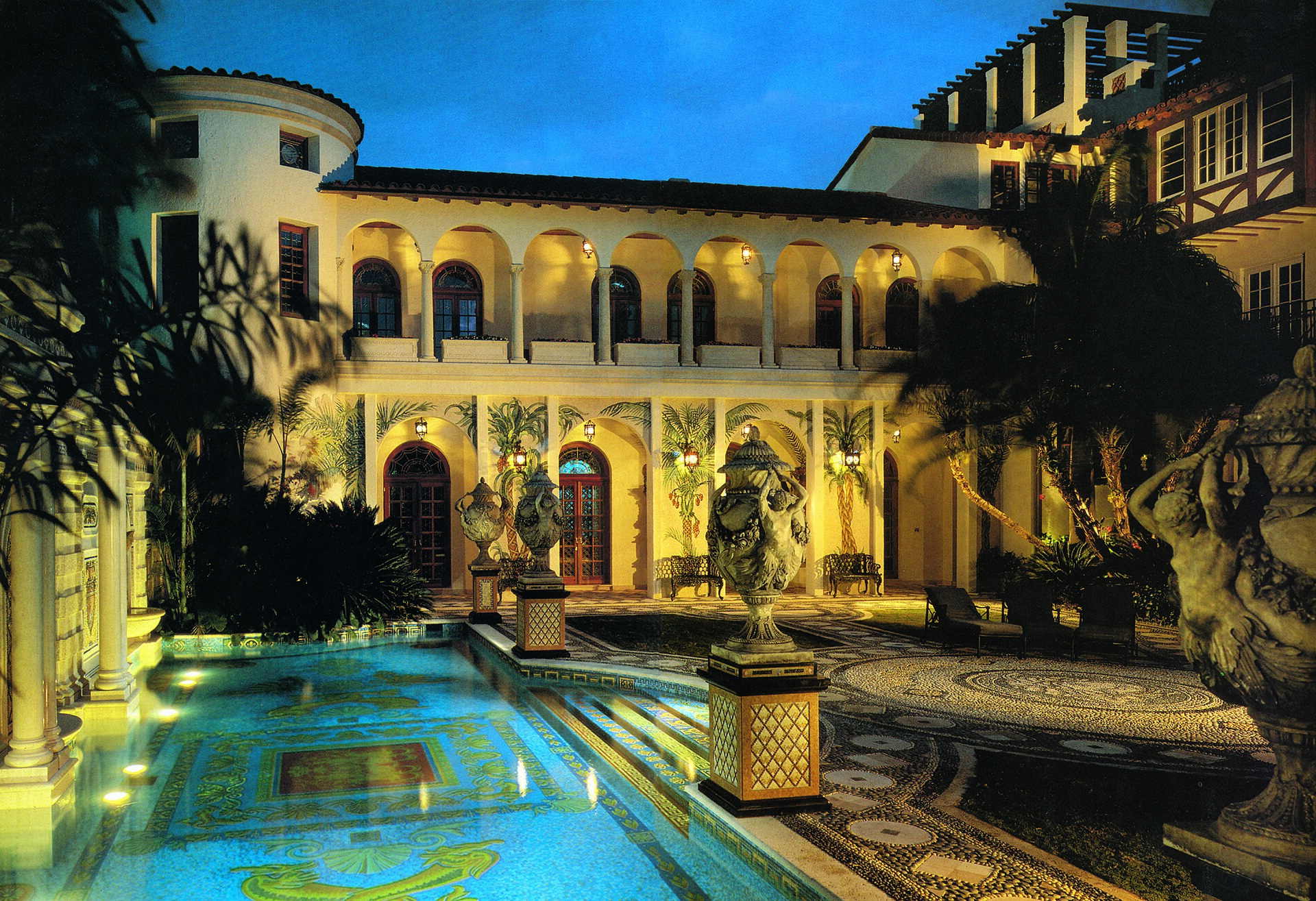
Photo: FANTINI1900 / Wikimedia Commons, CC BY-SA 4.0 · See the image credits page.
The waterline is the hardest-working strip on a pool. Oil, sunscreen, dust and a salt system collect there. The water moves with bathers and wind. If you treat the band as decoration, you will spend a decade cleaning a tide mark off the wrong material.
Australian custom pools usually carry a tiled waterline even when the rest of the interior is pebble or quartz. That is a maintenance joint, not a fashion leftover. Feature walls — spa spills, raised bond beams, a dark mosaic end wall — are the same idea taken into architecture. Get the band right, then decide whether you want a wall that does something.
The waterline as a maintenance band
A waterline tile is a replaceable, scrubbable face at the height where the chemistry and the air meet. It should be high enough that a normal operating level and a bit of surge still sit on tile, not on pebble or on the coping stone. It should be detailed so the coping can be lifted or resealed without destroying the mosaic.
Skip the band and the scum line sits on the interior finish. Pebble holds oil in the crevices. A painted wall stains and wears. Coping stone, especially a calcium stone, etches when someone attacks the mark with acid. The interior and the coping both last longer if the dirty work happens on a tile you can actually clean.
The band is also where fittings live: skimmer lips, waterline returns, a cleaner point, sometimes a light. Coordinate the tile module with those openings so you are not cutting a twenty-millimetre sliver beside a skimmer. That is a drawing problem, not a site invention.
Glass mosaic
Glass mosaic is the default language of a custom Australian waterline because it handles immersion, fits curves, and takes light. A mid-tone blend disappears into the water. A contrast band reads as a horizon from the kitchen. A busy blend looks like a souvenir shop.
On a spill face — the weir of a spa, the wet wall of a raised source — glass mosaic is in its element. Water sheets across it and the tesserae catch light at night. Specify a mosaic and adhesive rated for immersion, and a fall that is actually a fall. A “feature wall” that only weeps in the middle is a tiling and a hydraulic problem together.
Glass has limits. A dropped weight or a dragged coping unit will bruise tesserae. On a family step, keep a tougher face for the tread. Colour in the packet is not colour in the water: blues go deeper, whites glare, golds can look like tea. View samples wet, vertical, and in the yard.
Ceramic and porcelain at the waterline
Ceramic and porcelain mosaics earn their place where you want opacity, a colour glass will not hold, or a harder wearing face. A glazed ceramic is easy to wipe. A textured porcelain can sit on a step that glass would make nervous. Do not use an interior wall tile because it matched the bathroom — pool water and ultraviolet are not a shower. A dark ceramic band on pale pebble is a classic Australian detail. A white band on a white interior looks clean on handover day and shows every speck thereafter.
Spa spill walls and raised water
An attached spa that spills into the pool is the feature wall most households actually live with. The spill edge is a weir. It needs a level that is true, a lip that does not break up into dribbles, and a face that can be cleaned of the scale a heated spa will throw. Mosaic is the usual answer. A stone face can work if the stone is dense and the joints are honest; a porous sandstone weir will weather in a salt spa faster than you expect.
The noise of a spill is a design choice. A thin sheet is a hiss; a thicker flow is a conversation you cannot turn off at 10pm in a Paddington terrace. Put a valve in the circuit so the household can quiet the spa without draining it. Neighbours and outdoor living both care.
Raised water also changes the barrier conversation. A spa wall can become a climb point if a bench or a planter sits on the public side. The fencing essay is not optional reading because you liked a raised spa on Instagram.
Bond beams that people sit on
The bond beam is a structural thickening at the top of the shell. Left alone, it is hidden under coping. Expressed, it becomes a bench, a sun shelf edge, or a place to put a drink. Once people sit on it, it is no longer only a beam.
Tile or stone the sitting face for heat and slip, not only for look. A dark mosaic bench in full western sun will empty itself. A sharp tile edge will cut the back of a thigh. A beam that is also a step into the water needs a nosing the foot can read. If the beam is wide enough to be a daybed, talk to the engineer before the tiler — the load and the waterproofing are not a standard coping detail.
A tiled beam is a good place for a contrasting mosaic that you would not want on the entire floor. Keep the busy pattern where a body sits for ten minutes, not where a swimmer stares down a lap lane.
Grout, movement and the ugly years
Grout fails before tesserae do. Cementitious grout at a waterline will darken, grow, and recede. Epoxy grout lasts longer, costs more to put in, and is unforgiving of a sloppy wipe. Either choice needs joints that are wide enough to fill and movement joints where the band meets a corner, a skimmer, or a change of substrate.
Do not run a rigid grout across a construction joint and hope. Do not let a dark grout turn a pale mosaic into a grid you can see from the street. Sample the grout colour wet. Recarving and regrouting a waterline is normal maintenance after a run of summers; pretreat it as a service, like a pump rebuild, not as a crisis.
Adhesive failure shows as a hollow sound and then as a missing tile. Hollow tiles at a waterline let water behind the band. Get them replaced early. A “it is only one piece” delay is how a metre of mosaic comes off in a sheet.
Alpine frost, lightly
Most Australian pool country does not freeze the bathing water. The ACT, the NSW alps and the Victorian high country can freeze a thin film on a spill, a wet coping joint, and a spa turned down for a week of snow. If that is your site, use tiles and adhesives rated for frost and immersion, and give the spill a way to be turned off or kept moving. Southern winter care belongs with winterising; the tile specification belongs here. A cover can protect the band from ultraviolet and can also grind grit across it — detail the rebate so the lid is not chewing the first row.
Walls that earn their keep
A feature wall should do a job: hold a spill, hide a raised beam, take a dark colour that the floor cannot, or catch light at night. A wall that is only a different mosaic because the budget had a line item will date. Plant behind a raised wall with roots and leaf drop in mind — the landscape will stain the tile if you put a messy species on the windward side.
Stand in the garden at the hour you will actually see the wall. Morning glass is a different colour to 4pm glass. If the wall faces west, heat and glare matter as much as the pattern. Then write a short specification: tile body, sheet size, adhesive, grout, movement joints, spill level, and who is responsible when a tessera pops in the second summer.
The materials hub treats interiors, coping and light as one room. The waterline is the seam between them. Spend the care there, and the rest of the finish has a chance to age as architecture rather than as a cleaning problem.
Photo: FANTINI1900 / Wikimedia Commons, CC BY-SA 4.0
Questions readers ask
- Can I skip waterline tiles on a pebble pool?
- You can, and plenty of older pools did. The scum line then sits on the pebble or on the coping nose, which is harder to clean and uglier when it stains. A proper tiled band is cheaper than years of arguing with a tide mark.
- Are glass mosaics too fragile for a family pool?
- Glass mosaic is at home underwater and on a spill face if it is specified and adhered as a pool system. It does not love a dropped dumbbell or a coping stone dragged across it. On steps and on a bench where people sit and twist, a tougher ceramic or a thicker mosaic is often the better face.
- Do I need freeze-rated tiles in Australia?
- Most of the inhabited coast does not freeze the water in a maintained pool. Alpine NSW, the ACT and the Victorian high country can put a spa spill, a thin sheet of water and a saturated grout joint through freeze–thaw. There, ask for immersion-rated tiles and a grout system the manufacturer will stand behind in frost, and winterise the waterline you cannot drain.
Found an error? Use the contact form or read how we handle corrections in editorial standards.