How to brief a custom pool designer in Australia
The first meeting should be about how you live, how the block fails, and what the water is for — not a Pinterest board and a handshake.
Custom Pools editorial team · 12 March 2026 · Updated 20 March 2026 · 16 min read
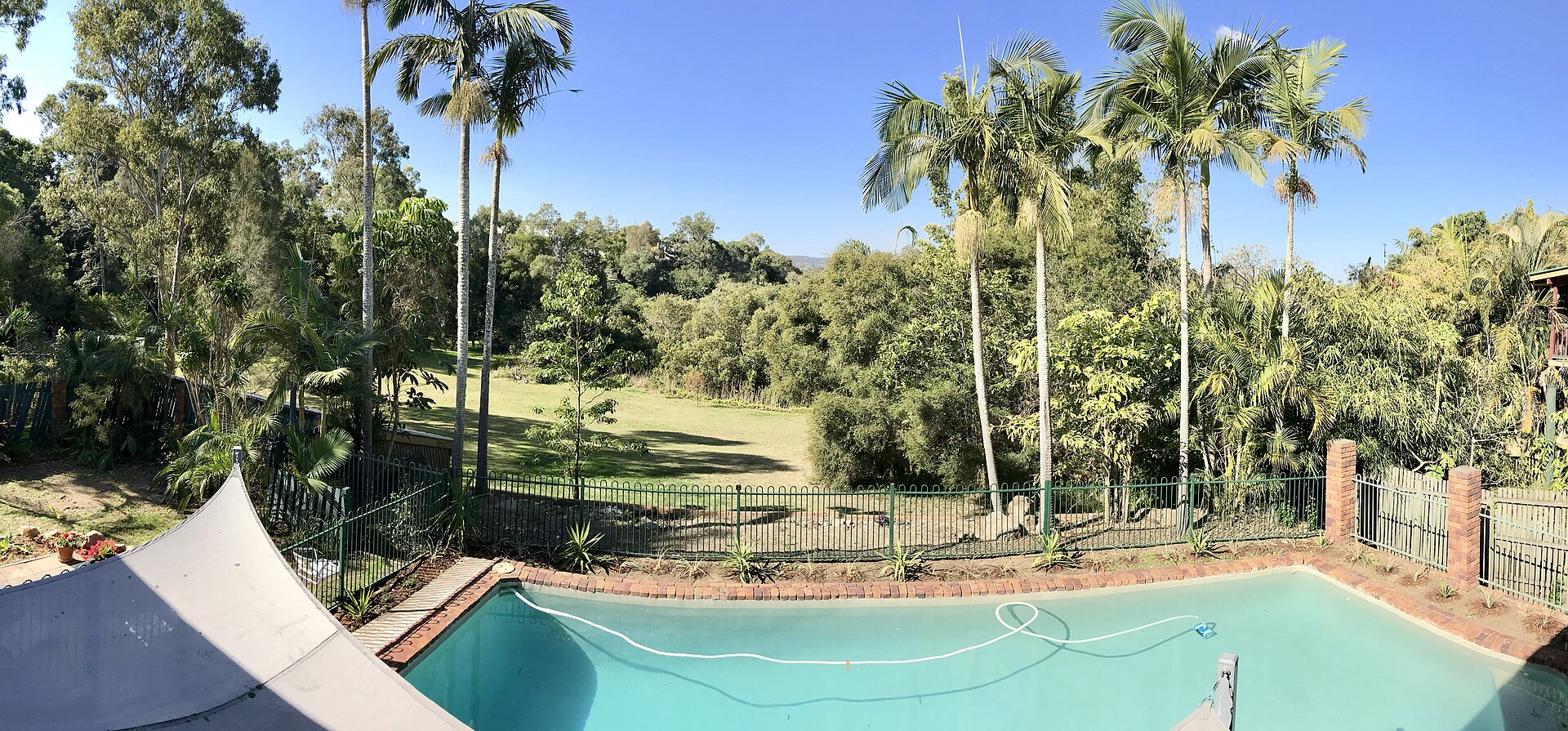
Photo: Kgbo / Wikimedia Commons, CC BY-SA 4.0 · See the image credits page.
Most Australian custom pools fail in the brief, not in the concrete. The shell is poured, the pebble looks as the sample promised, and only then does the household discover that the afternoon sun turns the western coping into a frypan, that the roller sits where the outdoor table wanted to go, or that the certifier will not accept the glass the joinery shop already ordered.
A brief is not a mood board. It is a set of constraints that a designer can test. If you cannot write those constraints in a page, you are not ready to compare quotes.
Decide what the water is for
A lap pool, a family pool and a reflecting court are different structures. A 20-metre lap lane wants length, a consistent depth and a quiet hydraulic return. A family pool wants a shallow shelf, a place to stand with a toddler, and a barrier that does not turn every trip from kitchen to water into a gate opera. A dark, still court wants an interior that stays looking like ink and a circulation pattern that does not scribble the surface.
Write the uses in order. “Swim training before work, children on weekends, entertaining twice a month, almost never a party of twenty” is a brief. “Resort luxury” is not. If you want both laps and a play shelf, say so early; the extra width and the change in depth drive excavation, steel and cost.
In much of Australia the pool is also a summer living room. That does not mean it must be large. A well-placed 7-metre plunge with a bench, a shade structure and a decent outdoor shower will be used more than an 11-metre rectangle that sterilises the rest of the garden. Read how shape follows the block before you fall in love with a kidney from a 1980s brochure.
Put the block on the table
Bring a survey. If you do not have one, pay for it before design, not after. Designers need boundaries, levels, the house finished floor, the location of sewers and stormwater, and any easements. A six-metre rear setback that looked generous on a real-estate listing can vanish once you add a 1.2-metre barrier zone, a 600-millimetre paving band and a plant room that cannot sit over a sewer.
Walk the yard at 8am, noon and 4pm in the season you will actually swim. In Sydney and Brisbane that is high summer; in Melbourne and Hobart it may be a heatwave week in January and a handful of still autumn days. Note where the house throws shade, where the western sun hits, and where the neighbour’s new second storey will land if their DA has been lodged. Orientation, shade and solar gain should be a design input, not a surprise in February.
On a slope, do not let anyone “just step it down a bit” in conversation. Stepped water is a structural and waterproofing problem. Excavation, retaining and engineering belong in the first sketch, and so does the question of where the spoil goes. Carting clay off a tight inner-urban site is a line item that wrecks a cheerful quote.
Name the climate, not the suburb slogan
“Indoor-outdoor lifestyle” is marketing. The climate is not. A Gold Coast pool that is used nine months of the year has a different heating conversation to a Canberra pool that must survive frosts and a short season. A Fremantle pool lives in salt air and sand. A Cairns pool lives in a wet season that laughs at a cheap chlorinator.
Tell the designer whether you will heat, whether you will cover, and whether you will travel for six weeks in January. A cover changes coping detail, roller storage and the look of the water when you are away. Heating changes plant-room size and running cost. Both change the brief more than a choice of mosaic.
If you are on the coast, say how close, and whether you can taste salt on the verandah rail. That single fact should push the specification toward stainless grades, coatings and durability.
Talk about the barrier as architecture
Australian pool barriers are not a product you add at the end. AS 1926 and the state laws that sit on top of it decide where doors can open, how high a window sits, what a boundary fence must do, and whether the kitchen can look at the water through an openable stacker. If the house is still in design, the barrier should be drawn with the joinery. If the house exists, the brief should admit which openings will have to change.
Owners who want “invisible glass all the way around” need to hear about maintenance, coastal corrosion, climbing zones from BBQ benches, and the cost of a gate that actually latches in a northerly. Read pool fencing and Australian standards before you tell a designer that you do not want to see a fence.
Budget like an adult
Ask for a range that includes the shell, wet-area electrics, filtration, sanitiser, heating if you want it, coping, paving, fencing, gates, a cover if you want it, and a landscape that does not look like a crime scene. The number that appears in a pool-company advertisement is rarely that number.
In 2026 a straightforward custom concrete pool on an easy suburban site in a capital city commonly lands, fully dressed, somewhere from the low hundreds of thousands of dollars once paving and barrier are included. Wet edges, serious excavation, fully tiled interiors and architectural glass sit above that without apology. What a custom pool costs is a separate essay; the brief only needs you to say which world you are in.
Do not run a race between three builders on an unfinished sketch. You will get three different pools. Pay for a design and a specification, then tender. If a company will only design if you commit to build, treat that as a sales process and keep an independent engineer in the room.
Ask who owns the risk
A useful first meeting ends with names. Who is the designer of record. Who is the builder. Who is the engineer. Who lodges the approval. Who certifies the barrier. Who commissions the hydraulics. In some states the pool company wraps most of this; in others you are assembling a small project team. Either model can work. What does not work is a WhatsApp group in which nobody owns the overflow that stains the sandstone.
Ask how many projects of this type they have finished in the last two years, not how many awards sit in the foyer. Ask to see a plant room, not only a twilight photograph. Ask what failed on the last job and how they changed the detail.
Write it down
After the meeting, send a one-page note. Uses. Users. Season of use. Heating and cover. Budget band. Survey status. Known easements. Barrier intentions. Neighbour issues. Materials you will not accept. That note is the brief. The drawings should answer it. If a later sketch quietly drops the shallow shelf or moves the plant room into the only service alley, you have a document to point at.
A custom pool is one of the few household projects that can injure a child, flood a neighbour and consume a decade of weekend labour. Treat the brief with that seriousness and the rest of the design hub becomes easier to read.
Photo: Kgbo / Wikimedia Commons, CC BY-SA 4.0
Questions readers ask
- When should I bring a pool designer in?
- Before you lock the house floor plan if the pool is part of a new build, and before you spend on a landscape concept if the garden already exists. The shell, plant room and barrier affect everything else.
- Do I need an architect as well as a pool designer?
- On a simple suburban rectangle, a good pool company designer and a structural engineer may be enough. On a slope, a wet edge, or a house that opens as one room to the water, pay for an architect or landscape architect who will own the levels.
- What should I take to the first meeting?
- A survey, the title, any easements, a summer and winter photograph of the yard, a note of who will use the water, and a budget range that includes fencing, paving, heating and landscaping.
Found an error? Use the contact form or read how we handle corrections in editorial standards.