Tropical pool care in Queensland and the Top End
Wet-season rain dilutes the residual, afternoon storms throw a garden into the water, and algae in Cairns does not wait for Monday. Tropical care is speed, screens and a sanitiser that keeps up.
Custom Pools editorial team · 26 November 2025 · Updated 10 February 2026 · 20 min read
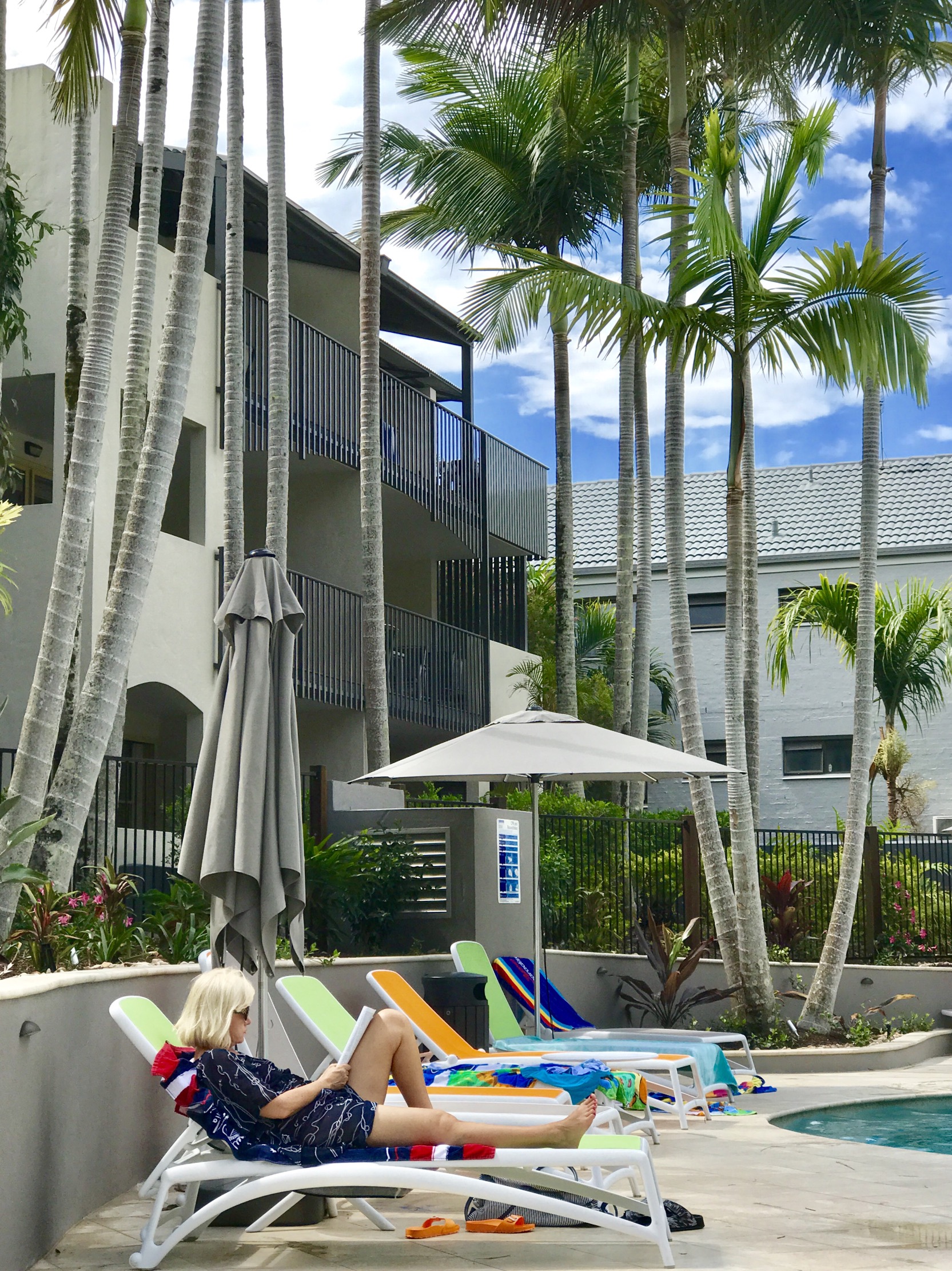
Photo: Kgbo / Wikimedia Commons, CC BY 4.0 · See the image credits page.
A pool in Cairns, Townsville or Darwin is not a Brisbane pool with extra palm trees. It is a body of water that lives through a wet season: heavy rain, low pressure, warm nights that never give the chemistry a rest, and a garden that grows toward the skimmer as if it had a plan. Noosa and the Sunshine Coast sit on the prettier edge of the same problem. Brisbane is milder, drier in winter, and still capable of a January week that behaves like the north.
If you copy a Sydney summer routine and visit the plant room every Saturday, the tropics will beat you. The job is faster testing after weather, physical removal of monsoon debris, a sanitiser that can rebuild a residual overnight, and planting that does not treat the pool as a compost socket.
Wet-season dilution is the main event
A tropical downpour is a lot of water. It overflows the weir, it trips the auto-fill the other way, it drops the salt reading, it drops the free chlorine, and it delivers whatever was on the roof, the screen and the neighbouring banana patch. Owners see dark water and reach for algaecide. The first cause is often simply that the residual was washed thin and the cell is now sitting in water too fresh to work well.
After a serious wet-season event: restore circulation, clean the baskets and the pump strainer, clean or backwash the filter, then test salt and free chlorine before you invent a more exotic problem. Bring salt back into the cell’s working band if you run one. Dose chlorine if the cell cannot catch up — liquid chlorine is the usual fast tool and does not add a pile of stabiliser while you are already fighting weather.
Cyanuric acid also dilutes, which sounds convenient if you were high, and inconvenient if you were only just protected. Recheck it after a month of storms, not after a single shower.
Overflow water has to go somewhere legal. A wet-edge or a deck drain that dumps onto a neighbour in a Cairns hollow is how weather becomes a dispute. The hydraulic design should have assumed the wet season. If it did not, fix the drain; do not just lower the water and hope.
Afternoon storms, and the day that has two climates
Tropical and subtropical afternoons often build a storm that the morning did not mention. The household swims at eleven in hard sun. At four the sky empties. At five the pool is full of petals and the residual is thinner than the morning test suggested. A routine that only tests at Saturday breakfast will miss this entirely.
On storm weeks, test in the evening or the next morning before anyone treats the water as safe on yesterday’s number. Run the filter through the evening. Empty the skimmer before you go to bed so the overnight pump is not chewing a soup of frangipani.
Lightning is a reason to get out and stay out. It is not a reason to leave the cover off and the baskets full until Monday.
Townsville, Cairns, Darwin and the Brisbane comparison
Cairns and the far-north wet-tropics coast: expect a true wet season, heavy litter, warm water almost all year, and algae that does not need encouragement. Heating is rarely the brief. Shade, screens and sanitation are.
Townsville and the dry tropics: a more distinct dry season, serious sun, and a wet season that can still be violent. Evaporation in the dry can concentrate salts and raise the water bill for top-up. Dust and a harder light make interiors and eyes both less forgiving.
Darwin and the Top End: build-up humidity, a monsoon that is a season rather than a mood, and a wildlife list that includes frogs as a default, not a surprise. Cyclone preparation is a household plan; the pool’s part is a lowered or managed water level only if a competent person has told you to, secure furniture, and a plant room that will not become a projectile. Do not empty a concrete pool because a cyclone warning appeared on your phone.
Brisbane and the populated southeast: a long swim season, a wetter summer than Melbourne, a drier winter than Cairns, and enough heat to grow algae in a neglected week. You can often reduce hours and output in winter. You cannot treat February like Hobart.
Coastal strips from the Gold Coast through to Port Douglas add salt air on top of the climate. That is a materials problem as much as a water problem. The chlorinator and the stainless specification have to be in the same sentence.
Algae speed, black water and the weekend you were away
Warm water and strong light make a small residual failure visible as green, yellow or black faster than southern owners expect. A Friday storm, a Saturday flight, a Monday return is a classic Queensland narrative. The prevention is a residual that was healthy on Friday, a cover or screen, and someone who can attend if you are not there. The cure, once the water is opaque, is physical cleaning, filtration, a measured oxidiser, and patience. There is no dignified shortcut that skips the filter.
Mustard algae and black spot both appear. Brush. Confirm the circulation reaches the spot. Confirm the sanitiser is present at the end of the day, not only at the start. Phosphate stories are popular in the tropics because rain and soil bring nutrient; treat phosphate as a contributor after you have restored chlorine, not as a superstition that replaces it.
Dark interiors hide the early tint and run warmer. That can be a design pleasure and a care problem. Know which you bought.
Pumps, hours and the idea of 24-hour running
In the hottest, wettest, dirtiest weeks a long daily run — in some yards, around the clock for a stretch — is how you keep a filter working and a residual moving. Variable-speed pumps make that less painful than it was when every pump was a single loud speed. The point is turnover and skimming, not virtue.
It is not a rule for the whole year. A still, dry August in Brisbane does not need January hours. A cyclone-week power outage will remind you that circulation is infrastructure; when power returns, expect to clean before you swim.
Listen to the filter, not the folklore. Rising pressure or falling flow means the media or cartridge is holding the wet season. Clean it. A chlorinator on a starved filter is decoration.
Plant rooms in the tropics cook. Shade the room, ventilate it, and do not seal a heat pump or a cell into a tin box because it looked tidy on a plan. Electrics and moisture are a reliability issue here in a way Melbourne frost is a reliability issue there.
Screens, frogs and the garden that wants the water
Frogs treat a tropical pool as habitat. So do geckos and a lot of insects. A solid cover is the strongest physical answer. Where a cover is rejected, a well-detailed screen enclosure on some Cairns blocks changes the life of the pool.
If you remain open to the sky, accept the morning scoop. Remove animals with a net; do not dose the water as a poison. Heliconias, frangipani and mango are beautiful and messy. Place them with the storm wind in mind. A landscape plan that ignores the wet season is a water-care plan that will fail.
Mosquitoes breed in still pockets: a cover puddle, a pot saucer, a blocked drain. The residual should prevent breeding in the pool itself if the water is actually sanitised.
Sun, cyanuric acid and the tropical special
The tropical sun is a chlorine destroyer. Outdoor pools need cyanuric acid in a working band. They also accumulate it if someone keeps adding stabilised product through a long summer. The combination of high cyanuric acid and a residual that rain keeps knocking down is how you get water that “tests all right” on a strip and still grows a bloom.
Prefer a salt or mineral cell plus liquid chlorine for recovery, and keep tablets out of the story unless you know why you are using them. Recheck cyanuric acid at the start and the end of the wet. Dilution is happening whether you plan it or not; you may as well measure it.
Metals from bore or tank top-up stain pale interiors in warm water. Test the source.
A wet-season habit
Before the wet: service the cell, clean the filter, check covers and screens, clear gutters, write down salt and cyanuric acid.
During: test after weather, keep baskets empty, let the pump work, restore salt and chlorine quickly, brush, watch the waterline.
After a stint away: assume nothing. Test, clean, then swim.
Tropical care is not more mysterious than southern care. It is less forgiving of delay. The households that stay clear treat an afternoon storm as a reason to walk to the plant room the same day, and let the garden, the coastal hardware and the sanitiser be specified for the place they actually live. The rest of the water, climate and care library assumes that speed.
Photo: Kgbo / Wikimedia Commons, CC BY 4.0
Questions readers ask
- Why does a Cairns pool go green so fast?
- Heat, strong light, nutrient from rain and garden waste, and a residual that falling water has just diluted. Algae can establish in a weekend if the chlorinator was already behind. Test after storms, not only on a Saturday routine.
- Should the pump run 24 hours in the wet season?
- Sometimes, in the hottest and dirtiest weeks, a long daily run is the lesser cost. It is not a law. It is a response to load, filter pressure and a residual that must circulate. A quiet dry-season week does not need the same hours.
- How do I keep frogs and leaves out?
- A cover or a well-detailed screen, a fence that is not an open invitation, and planting that does not shed over the water. Frogs will still visit. Scoop them with a net. Do not dose the pool as a wildlife poison.
Found an error? Use the contact form or read how we handle corrections in editorial standards.