Heating a pool in Australia: solar, heat pumps and gas
The cheapest heater is a cover. After that, choose between roof collectors, a heat pump that can run on your own solar power, and gas for the days you want the water warm by tonight.
Custom Pools editorial team · 4 February 2026 · Updated 18 February 2026 · 17 min read
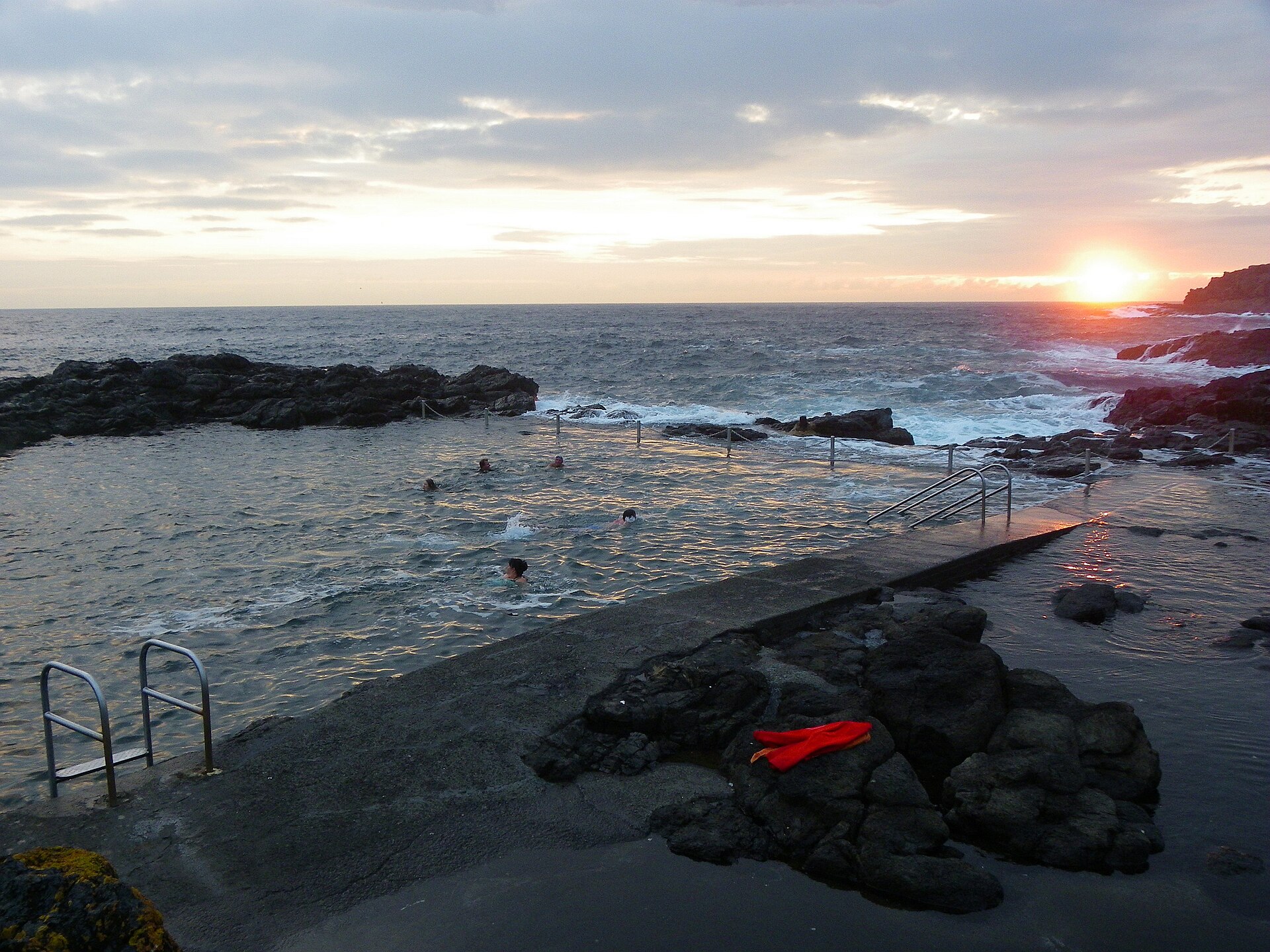
Photo: Liese Coulter, CSIRO / Wikimedia Commons, CC BY 3.0 · See the image credits page.
Australians talk about heating as if it were a product. It is a habit. The water loses heat through the surface every hour the sky is clear and the wind is up. A cover interrupts that loss. Collectors, heat pumps and gas only replace what the surface has already given away. If you skip the cover and buy a heater, you are paying to boil off the night.
The second habit is climate honesty. A Gold Coast family that swims from September to May is not in the same conversation as a Canberra household that wants four still weekends and a Christmas week. Orientation and shade decide how much free heat the water already gets. The machine then fills the gap. Choose the machine for the gap you actually have, not for a brochure that was photographed in March.
The cover is the heater you already own
An uncovered pool at 28 degrees in a dry southerly is a radiator. Most of the energy you paid for leaves through evaporation. A roller cover, a slatted automatic cover or a well-cut bubble blanket — used — will do more for a season than a one-size-up heat pump used against an open surface.
“Used” is the word. A cover that lives in a crate because the kids will not drag it, or because the roller was parked in the only path to the clothesline, is sculpture. Put the roller where a tired adult can operate it with one hand. If the architecture cannot accept a visible roller, budget for a slatted cover in a recessed housing at design time. Retrofit is how covers become optional and heating bills become the topic of January.
Covers also cut debris and chlorine demand, which is why they belong in the water-care conversation and not only in the energy one. They change coping detail and the look of the water when you are away. That is a brief item, not an accessory.
Roof solar collectors
Thermal collectors — black mat or glazed panels on the roof, with pool water pumped through them — are the old Australian answer and still a good one when the roof is right. They add heat when the sun is on the roof and the controller decides the roof is warmer than the water. They add almost nothing on a grey Melbourne week in November, and they can overshoot on a bare tin roof in a Queensland February if nobody set a limit.
They are not photovoltaic panels. They make warm water only while the sun and the pump agree. The running cost is the pump. The hidden cost is roof space that might have held an array, and a plumber who understands pool water.
A north-facing roof with a clear winter sun path is the brief. If the house already wears a full photovoltaic array, adding collectors means a second roof plane or a frank conversation about which job the roof is for. Collectors pair well with a cover and afternoon swims. They pair poorly with a 6am August habit in Victoria.
Heat pumps, and heat pumps that drink your own solar power
A heat pump steals warmth from the air and puts it in the water. In mild Australian coastal air it does that efficiently. In a Canberra frost at dawn it does it slowly or not at all, depending on the unit’s lower operating limit. The useful number is not a brand slogan. It is the ambient range the machine is rated for, the noise it makes at the boundary, and whether your switchboard can feed it.
Photovoltaic-driven operation is the contemporary Australian version of “solar heating”. The roof makes electricity; the heat pump spends it. That is a different system to thermal collectors. It can run whenever the array is exporting and the tariff makes sense, and it can, if you let it, also run at night on grid power. The honest design is a heat pump sized for the pool, an array sized for the house plus the pump’s daytime load, and a control that prefers sunny hours. The dishonest design is a giant pump, a small array and a surprise bill in June.
Noise is a neighbour issue. Heat pumps hum and their fans move air. A unit against a paling fence, aimed at a bedroom two metres away, will become a dispute. Manufacturers publish sound figures; those figures are not your boundary. Ask for a site layout, a night setback if the model has one, and enough air around the coil. Boxing a heat pump in “so you cannot see it” is how you kill efficiency and raise noise.
Defrost cycles, winter derating and the difference between heating a 30-square-metre plunge and an 11-metre family rectangle all matter. A spa or swim spa is a smaller, hotter body and often wants its own heater — see spas, plunge pools and swim spas — rather than a single machine asked to be two climates.
Gas for peak heat
Gas — natural gas where the street has it, LPG where it does not — is the way to lift a lot of water in a few hours. That is why it still appears on pools that are used as a weekend house, on spas that must be 38 degrees on Friday night, and on southern pools that are uncovered for a heatwave visit.
It is a poor way to hold 28 degrees all season against an open surface. The running cost is the fuel you burn, and you burn it every time the sky and the wind take the heat away. If a salesperson shows you a single winter bill from a covered indoor pool in Brisbane and implies your Mornington uncovered rectangle will match it, they are selling.
Gas also has a flue, condensate on cheap installations, and a future in a country that is electrifying households. Ask whether a heat pump plus cover will do the ordinary days and whether you truly need gas for the extraordinary ones. Some households do. Many are buying speed they will use three times.
Southern seasons and northern seasons
Melbourne, Hobart, Adelaide’s hills and Canberra do not have a swimming season so much as a set of swimming weeks. Heating those weeks is possible. Heating the whole winter outdoors is a lifestyle decision and a running-cost decision, not a default. Winterising is the alternative: keep the water sane, cover it, and heat only if you will actually get in.
Sydney and Perth sit in the middle. Shoulder months respond well to collectors or a modest heat pump and a cover. Midwinter swimming is optional and expensive if the surface is open.
Brisbane, the Gold Coast and the coastal north often need less mechanical heat than owners fear, and more attention to shade and overheating than owners admit. A dark interior in a north-facing Queensland court can be uncomfortably warm in February without any heater at all. The brief there may be a cover to keep debris off, a tree that does not drop a rainforest into the skimmer, and a heater used in August, not December.
Far-north pools are rarely a heating problem. They are a wet-season chemistry problem. Do not spend the heating budget before the cover and sanitation budget.
Three-phase, switchboards and the unglamorous constraints
Large heat pumps draw serious current. Many quieter residential units prefer three-phase. A 1960s weatherboard on single-phase may need a supply upgrade — a network conversation and a lead time, not a Saturday extra. Put electrical capacity in the first brief, with gas and the roof plan.
Running costs are ranges, not invoices. A covered pool lifted a few degrees by a heat pump that prefers sunny hours is often a modest addition to a household bill. An uncovered southern pool held at spa temperature with gas through a windy week is a different order of expense — heating a shallow outdoor room with no roof. Anyone quoting a precise annual dollar figure without knowing your cover habit, tariff, climate and target temperature is inventing.
Specify the habit, then the machine
Write the season you will swim, the time of day, the target feel (cool plunge, family 26 to 28, spa-hot), whether the pool will be covered on workdays, and whether the roof is for electricity or for thermal collectors. Then choose.
A good default for a covered Sydney or Perth family pool is a heat pump that can ride the photovoltaic array, with collectors only if the roof would otherwise sit empty and the household swims with the sun. A good default for a weekend southern house is a cover plus gas or a heat pump used as a pre-arrival tool, not a 24-hour hold. A good default for the tropics is often no heater at all.
The rest is installation quality: condensate, noise, airflow, a controller the household will use, and a cover they will pull. Heating is not a miracle. It is the slow replacement of heat the wind already stole.
Photo: Liese Coulter, CSIRO / Wikimedia Commons, CC BY 3.0
Questions readers ask
- What heats an Australian pool most cheaply?
- A well-fitted cover, used every night and on workdays. Collectors and heat pumps then add heat. Gas is the expensive way to recover a weekend, not a cheap way to hold a season.
- Will a rooftop solar heat pump run for free?
- No. A photovoltaic array can offset a large share of a heat pump’s daytime load, but night running, winter sun and household demand still appear on a bill. Size the array and the pump together.
- Do I need three-phase power for a heat pump?
- Many larger residential units prefer or require three-phase. Check the incoming supply before you fall in love with a silent-looking box. A single-phase compromise can be noisier and slower.
Found an error? Use the contact form or read how we handle corrections in editorial standards.